Do Cash Buyers Pay Closing Costs?
If you need to sell fast, one of the first questions you’ll probably ask is: do cash buyers pay closing costs? The short answer is often yes, but it depends on who the buyer is, how the offer is structured, and what kind of sale you’re agreeing to.
That matters a lot when you’re already dealing with pressure from mortgage payments, probate, divorce, code issues, tenants, or a house that needs more work than you want to put into it. A cash offer can sound simple, but you still want to know exactly what comes out of your pocket before you sign anything.
Do Cash Buyers Pay Closing Costs in New York?
In many direct cash sales, the buyer pays at least some closing costs, and in some cases they cover nearly all of them. That is especially common when a professional home-buying company is trying to make the process easier for the seller. In those situations, covering title fees, transfer-related expenses, and other standard closing charges is part of the offer.
But not every cash buyer works the same way. An individual investor might offer a higher price and then expect the seller to cover several fees at closing. Another buyer may say they “pay closing costs” while building those costs into a lower purchase price. So yes, cash buyers can pay closing costs, but you still need to look at the full net amount you’ll actually receive.
For homeowners in Queens, Brooklyn, the Bronx, Long Island, or Nassau County, this is where clarity matters more than marketing language. What sounds like a great offer upfront can look very different once the paperwork shows who is paying for title work, transfer taxes, recording fees, liens, or attorney-related charges.
What Closing Costs Are We Talking About?
Closing costs are the expenses tied to finalizing the sale. Even when there is no mortgage involved, a real estate transaction still has paperwork, title processing, and legal steps that have to be completed.
In a New York home sale, common closing costs can include title and settlement fees, transfer taxes, recording fees, attorney fees, payoff processing for existing liens, and sometimes adjustments for unpaid property taxes, water bills, or violations. If you’re selling through an agent, there may also be commission. If you’re selling directly to a cash buyer, commissions are often removed from the equation, which can make a major difference in what you walk away with.
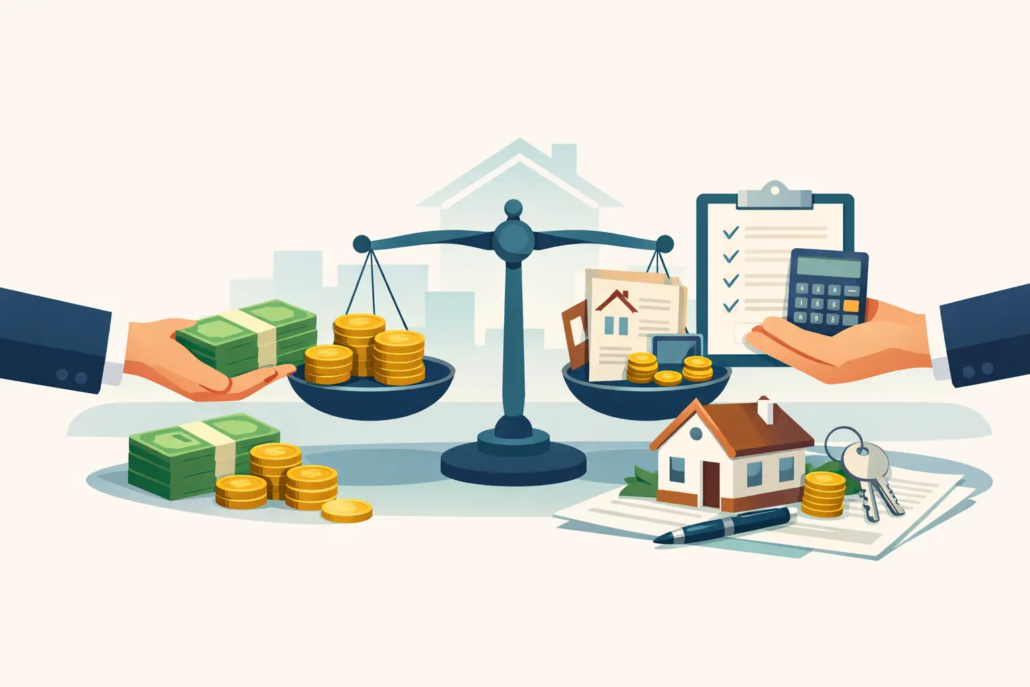
This is why two offers with the same purchase price are not really equal. One buyer may cover the title company and closing charges. Another may leave those to you. One may buy as-is with no repair requests. Another may come back later and renegotiate after seeing the property.
Why Cash Buyers Often Cover More Costs
A serious cash buyer is usually selling speed, certainty, and convenience. Covering closing costs helps support that promise.
If a homeowner is facing foreclosure, inherited a property they do not want, or owns a house with damage, open permits, or bad tenants, the last thing they want is more out-of-pocket expense. A direct buyer who wants that deal to move forward smoothly will often remove as many barriers as possible. That can mean no agent commissions, no repair requests, no inspection contingency, and no seller-paid closing costs.
From the buyer’s side, paying those fees can be worth it because it keeps the deal simple and helps avoid delays. From the seller’s side, it means more predictability. Instead of wondering what surprises will show up before closing, you have a clearer picture of your net proceeds.
That’s one reason many homeowners choose a direct buyer instead of listing. The selling price is only one part of the decision. The real question is how much stress, time, and money the sale will actually cost you.
When the Seller May Still Pay Something
Even in a cash sale, sellers are not automatically free from every expense. There are situations where money still comes out of the seller’s proceeds.
If there is an existing mortgage, that loan has to be paid off. If there are tax arrears, utility balances, HOA charges, judgments, or liens, those usually must be cleared before or at closing. In some cases, transfer taxes or legal fees may still fall partly on the seller depending on the agreement and the location.
That does not mean the cash buyer is being unfair. It just means some property-related debts are attached to the home and need to be resolved to transfer clear title. A good buyer will explain this upfront rather than wait until the closing statement to reveal it.
This is also why “we pay closing costs” should never be the only question you ask. You also want to ask, “Are there any other deductions from my proceeds?” That one question can save a lot of frustration.
Do Cash Buyers Pay Closing Costs or Just Lower the Offer?
Sometimes, both.
A buyer can offer to pay closing costs and still factor those costs into the price they offer. That is not unusual. Every buyer, whether retail or investor, is looking at the total numbers. The difference is whether they present the deal clearly and whether the final result still works for you.
For example, a traditional buyer may offer a higher purchase price but ask for inspections, repairs, financing time, and seller concessions. A cash buyer may offer less on paper but remove commissions, cover closing costs, buy as-is, and close in days instead of months. Depending on your situation, the lower offer may still leave you with a better net result and a lot less risk.
If you need certainty more than top-dollar retail pricing, that trade-off can make sense. If your house is in great condition and time is not a factor, listing may bring more money. It depends on your goals.
How to Compare a Cash Offer the Right Way
The best way to evaluate a cash offer is to focus on net proceeds, not just sale price.
Ask for a clear breakdown of what the buyer is paying and what you are paying. Find out whether there are commissions, repair credits, inspection contingencies, appraisal risks, or extra fees buried in the process. Ask how soon they can close and whether they can work around your timeline if you need extra time to move.
A strong cash offer is usually straightforward. You should know the price, the estimated closing date, whether the property is being purchased as-is, and which closing costs the buyer is covering. If the answers feel vague, that is a warning sign.
For distressed property owners, this kind of transparency matters even more. When you are behind on payments or dealing with a property problem, delays and hidden deductions can create serious stress. The cleaner the deal, the better.
What Sellers in Tough Situations Should Watch For
Homeowners under pressure are often the most vulnerable to confusing offers. If you are dealing with foreclosure, probate, divorce, inherited property, storm damage, or problem tenants, you do not need extra complications.
Watch for buyers who use broad promises without specifics. If someone says they pay all closing costs, ask them to put that in writing. If they claim there are no fees, ask whether they charge administrative, processing, or transaction fees outside the normal closing statement. If they want access to the property for repeated inspections before committing, ask whether the price is final.
A reliable cash buyer should be able to explain the process in plain English. You should not have to chase answers or guess what your final number will be.
That is why many sellers prefer working with established local buyers who know the New York market and already understand the title, tax, and closing issues that can come up. Companies like Nationwide Homes 4 Sale often structure their offers around simplicity, which is exactly what many stressed homeowners need.
The Real Answer to Do Cash Buyers Pay Closing Costs
Yes, many cash buyers do pay closing costs, especially professional buyers who want to offer a fast, low-hassle sale. But not all cash buyers pay the same costs, and not every “no-fee” offer means the same thing.
The smartest move is to look past the headline and ask what you actually keep after everything is settled. If the buyer covers title and closing costs, skips repairs, buys as-is, and closes on your schedule, that can be a strong solution when speed and certainty matter most.
If you’re considering a cash sale, don’t just ask whether the buyer pays closing costs. Ask what your final proceeds will be, how quickly they can close, and whether the deal stays simple from start to finish. That is usually where the best decision becomes clear.


Leave a Reply
Want to join the discussion?Feel free to contribute!